Why is financial inclusion key for people with disabilities?
When you hear the term “financial inclusion,” you probably think of opening a bank account or accessing credit. However, this concept goes far beyond that.
Financial inclusion means that everyone, regardless of age, circumstances, or background, has the opportunity to learn how to manage their money, make informed financial decisions, and access tools that enable them to pursue personal projects or start a business.
For people with disabilities, this opportunity can bring about a profound change in their quality of life—not because they lack talent or initiative, but because they often face barriers that make it difficult for them to access training, employment, or entrepreneurship programs.
Imagine a young woman with a disability who has a great idea for starting a small bakery business. She has the motivation and the skills, but she has never received training on how to manage her income, calculate costs, or promote her products. Without that knowledge, turning her idea into a source of income is much more difficult.
That is why financial education is also a tool for inclusion. When a person understands how to manage their finances, plan for their goals, and take advantage of opportunities for growth, their confidence in building a life plan with greater independence increases.
Financial literacy also creates opportunities
Talking about money isn't just about learning to save. Financial education helps develop the skills needed to make better decisions, manage resources, plan for goals, and deal with unexpected events responsibly.
These skills are useful for anyone, but they become even more valuable when they are part of programs aimed at strengthening the economic self-sufficiency of populations that have historically faced greater challenges in accessing opportunities.
In Guatemala, many people with disabilities want to start their own businesses, enter the workforce, or grow small family businesses. However, in addition to physical and social barriers, they may also face limitations related to access to training tailored to their needs.
Closing these gaps requires initiatives that combine technical expertise, accessible methodologies, and close support.
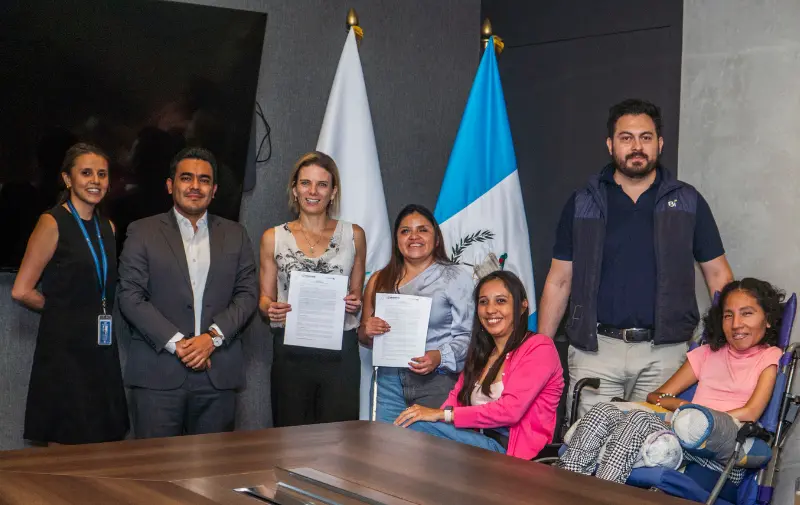
That is precisely the purpose of the partnership between Fundación Bi and Conectivas NGO: to promote training programs that enable more people to develop the skills needed to start businesses, innovate, and actively participate in the economy.
A partnership that fosters talent and participation
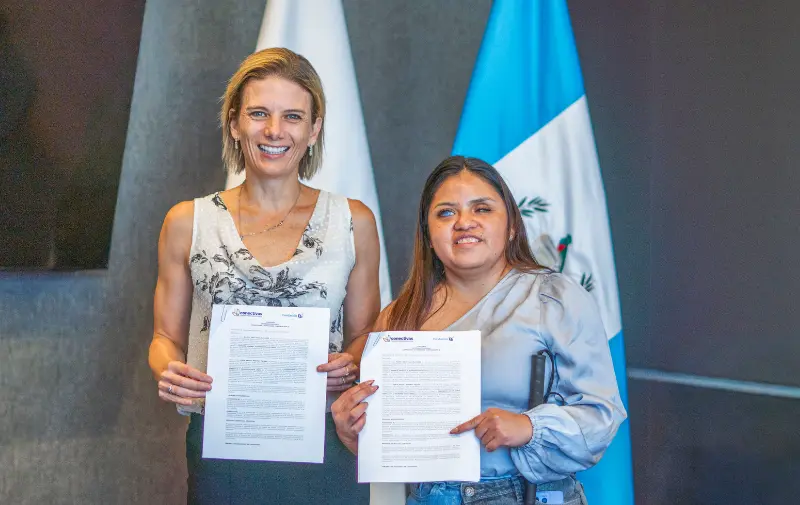
With the goal of creating more opportunities for development, Fundación Bi and Conectivas NGO have formed a strategic partnership focused on strengthening financial education, entrepreneurship, and comprehensive training for people with disabilities.
More than just an agreement between two organizations, this collaboration represents the combination of knowledge, experience, and commitment needed to develop programs that address the real needs of those seeking to realize their potential.
The initiatives will be aimed primarily at youth and adults with disabilities, as well as their support networks, recognizing that family and community support is also essential to achieving sustainable inclusion.
As part of this initiative, practical workshops, collaborative learning spaces, and training programs will be developed in accessible formats, incorporating tools related to financial education, technological innovation, and the strengthening of productive capacities.
Each activity will aim to help participants gain knowledge they can apply in their daily lives, in their personal projects, or in future ventures.
Entrepreneurship is also a way to build independence
For many people, entrepreneurship offers the chance to turn a skill into a source of income. This could involve making handmade products, offering a service, selling food, or putting their talents to use in areas such as design, technology, or baking.
However, having a good idea isn't always enough. Every startup needs planning, organization, and the knowledge to make informed decisions. Knowing how much it costs to produce a product, setting a selling price, managing profits, or reinvesting in the business are all factors that can make the difference between an idea that falls by the wayside and a project that succeeds in growing.
That is why entrepreneurship and financial literacy go hand in hand. When a person develops both of these skills, they increase their ability to generate income sustainably, strengthen their financial independence, and create new opportunities for themselves and their family.
For people with disabilities, entrepreneurship can also serve as a way to overcome barriers that sometimes limit access to formal employment. Having the tools to start or grow a business helps expand opportunities for economic and social participation.
Inclusion begins when we remove barriers
It is often thought that inclusion depends solely on adapting physical spaces. While accessibility is essential, it is also necessary to remove other, less visible barriers.
The lack of accessible materials, tailored training programs, or opportunities to develop new skills can limit many people's participation.
For this reason, this partnership is committed to creating learning processes designed from an inclusive perspective. While Fundación Bi will provide mentoring, specialists, technical support, and opportunities for learning and sharing experiences, Conectivas will contribute its expertise in designing accessible methodologies and adapting content to meet the needs of people with disabilities.
This combination of expertise will make it possible to develop more participatory programs, where each person can learn in an environment designed to enhance their abilities.
As María José Paiz, manager of Fundación Bi, said:
“We are convinced that the comprehensive development of communities is achieved by providing technical and financial tools that open up real opportunities. This partnership allows us to join forces so that more people can gain access to practical training that promotes their economic independence.”
For her part, Isela Magaly Monroy, a representative of the NGO Conectivas, emphasized that sharing methodologies and specialized knowledge makes it possible to develop initiatives that truly meet the needs of people with disabilities, promoting accessible and inclusive environments.
These statements reflect a shared goal: to give more people the opportunity to develop their talents and actively participate in the growth of their communities.
When an opportunity changes many lives
The impact of financial education doesn’t end when a workshop concludes. Someone who learns to manage their resources more effectively can share that knowledge with their family. Someone who builds up a small business can generate income that benefits their household. And someone who acquires new skills can become a role model for others in their community.
It is this multiplier effect that gives meaning to initiatives like this one. Each training session represents an opportunity to build trust, develop skills, and demonstrate that inclusion is also fostered by creating spaces where everyone can learn, participate, and grow.
That is why talking about financial inclusion is not just about money. It is about dignity, autonomy, and opportunities so that every person can pursue their life goals.
Building a more inclusive society is a shared responsibility
Creating a society where everyone has equal opportunities requires the participation of many stakeholders.
Social organizations bring expertise and close ties to communities. Educational institutions generate knowledge. Businesses can spearhead initiatives with a social impact. And citizens have the opportunity to get involved through volunteer work, partnerships, or by supporting projects that promote inclusion.
When these efforts come together, it is possible to bring about changes that go beyond a single person and benefit entire communities.
Through this partnership, Fundación Bi reaffirms its commitment to promoting programs that strengthen economic development, education, and inclusion, convinced that investing in people is one of the best ways to build a future with more opportunities for Guatemala.
Frequently Asked Questions
What is financial inclusion?
It is everyone’s access to knowledge, tools, and opportunities that enable them to better manage their resources, make informed financial decisions, and actively participate in the economy.
Why is financial education important for people with disabilities?
Because it strengthens skills in managing money, developing business ventures, setting goals, and promoting greater financial independence.
What is the goal of the partnership between Fundación Bi and Conectivas NGO?
Develop financial literacy, entrepreneurship, and technological innovation programs aimed at people with disabilities and their support networks, using accessible and inclusive methodologies.
How does entrepreneurship benefit people with disabilities?
It provides them with the opportunity to generate income, strengthen their economic independence, develop their skills, and actively participate in the development of their communities.
How can society contribute to greater inclusion?
Promoting accessible spaces, supporting training initiatives, volunteering, and fostering opportunities for everyone to develop their talents.