
ScaleUp Guatemala: How to Grow a Business Using a Methodology That Delivers Real Results
Starting a business usually begins with an idea, a lot of hard work, and the excitement of building something of your own. However, there comes a point when many entrepreneurs discover that growing a business requires much more than just selling more products or acquiring new customers. Getting finances in order, strengthening the team, innovating, and finding new market opportunities are challenges that arise when the business begins to take the next step.
In Guatemala, thousands of small and medium-sized businesses face this challenge every day. Many have the potential to grow, but they do not always have access to specialized methodologies, strategic guidance, or opportunities to learn from other entrepreneurs facing similar challenges.
With that vision in mind, ScaleUp Guatemala was launched—a program spearheaded by Fundación Bi that aims to help companies grow in a profitable and sustainable way. The graduation of its eighth cohort, which took place in Quetzaltenango and Totonicapán, demonstrates how access to the right tools can lead to more jobs, higher sales, and new opportunities for the communities where these businesses operate.
What is ScaleUp Guatemala, and how does it help companies grow?
When a company begins to establish itself, its needs change. It is no longer enough to manage day-to-day operations; it is also necessary to make strategic decisions that allow the company to grow without compromising stability.
ScaleUp Guatemala was designed specifically to support that process. It is a business acceleration program led by Fundación Bi in partnership with the Kirzner Entrepreneurship Center at Francisco Marroquín University, which implements an international methodology developed by experts from Harvard University and Babson College.
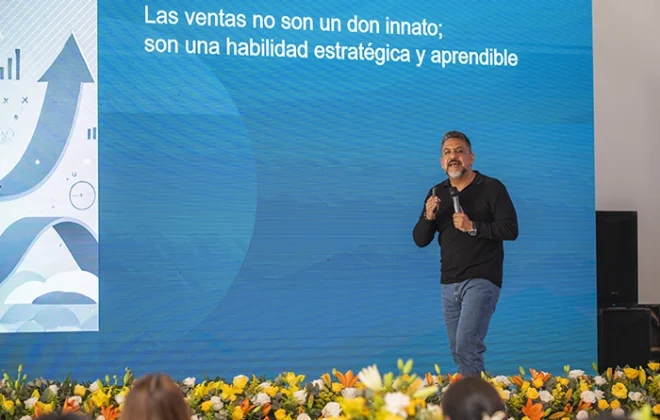
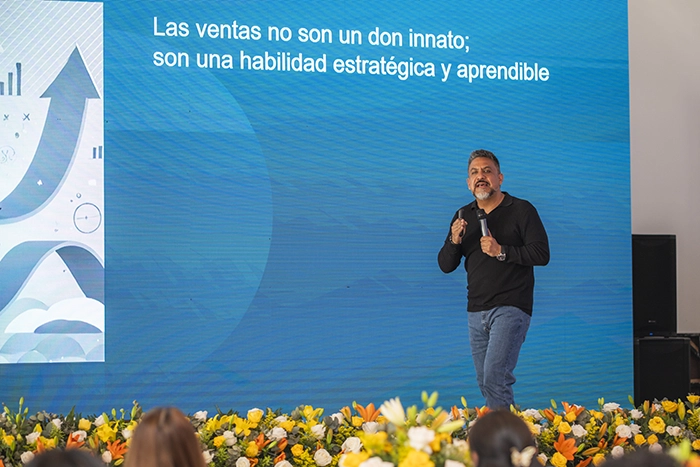
For five months, management teams work intensively to strengthen key areas such as sales, marketing, finance, and human resources. What makes the program so valuable is that learning isn’t limited to theory. Each company applies specific tools within its own business, allowing it to see results from the very first weeks.
Imagine, for example, a coffee shop that wants to open a second location or a family-owned business that wants to expand beyond its current region. In both cases, growth involves making decisions about costs, staff, processes, and new markets. Having a structured methodology helps reduce uncertainty and allows you to move forward with greater clarity.


Bringing opportunities to the interior of the country also promotes development
One of the most significant aspects of this eighth cohort was that it took place in the western part of the country. For a long time, most entrepreneurship training opportunities were concentrated in the capital, making it difficult for many entrepreneurs in the interior to access this type of support.
That is why Fundación Bi decided to bring these tools directly to entrepreneurs in Quetzaltenango and Totonicapán, demonstrating that talent and entrepreneurial potential are also present in Guatemala’s various regions.
As a company grows, so does its community
A company's growth often has an impact that extends beyond the business itself.
When a startup strengthens its operations, it can also hire more staff, buy from local suppliers, and offer better opportunities within its community.
For example, if a company manages to better organize its processes and increase its sales, it will likely need to hire new employees. Those new jobs provide income for more families and boost the local economy.
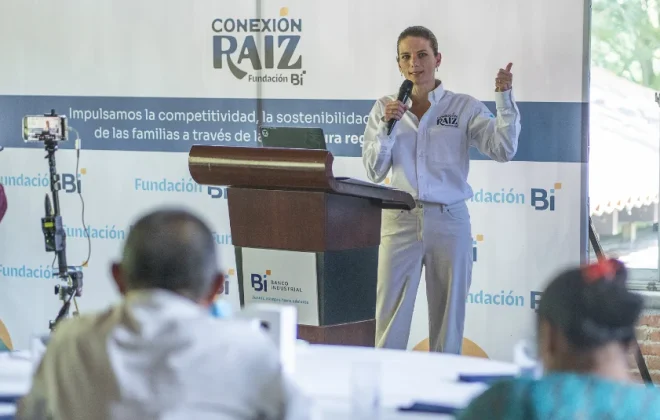
That is precisely one of Fundación Bi’s goals: to bring world-class technical expertise to the departments so that more entrepreneurs can strengthen their businesses without having to leave their communities.
The results from the eighth cohort show that growth is possible
The seven participating companies made progress that reflects the impact of combining discipline, support, and an appropriate methodology.
On average, they reported a 31.88% increase in sales, a figure that illustrates how the implementation of new strategies can yield measurable results in a relatively short period of time.
In addition, the process led to the creation of 33 new permanent jobs, nearly eight out of ten of which are in operational areas. This shows that business growth can also be a source of job opportunities for others.
Another important outcome was access to new resources to drive business expansion. Collectively, the companies secured more than US$1.9 million in new loans and more than US$413,000 in investment—resources that strengthen their ability to continue growing.
Innovation also played a key role. All participating companies launched or improved products and services during the program, while most managed to expand into new municipalities, and one of them began exporting to the United States and Japan—demonstrating that Guatemalan businesses can compete in international markets when they have the right tools.
Companies That Chose to Grow
The graduating organizations represent various economic sectors, demonstrating that business growth does not depend on a single industry, but rather on the ability to innovate and strengthen business management.
The participating companies were:
- Electricon Energy Solar
- Guerra León Architects
- SACAN Services and Products
- KISHÉ COFFEE SHOP
- The Boiling Cajun, Inc.
- Burritos and Grill
- Balam Corporation, Inc.
Each participant came to the program with different challenges, but they all shared the same goal: to build more competitive companies that are prepared to take on new markets.
Who can participate in ScaleUp Guatemala?
Following the results achieved in the western part of the country, Fundación Bi announced the call for applications for its ninth cohort, aimed at entrepreneurs in the department of Guatemala and nearby municipalities.
These types of programs are designed for small and medium-sized businesses that are already up and running and want to take the next step in their growth. Regardless of the size of the business, what matters most is the willingness to learn, implement changes, and work consistently throughout the process.
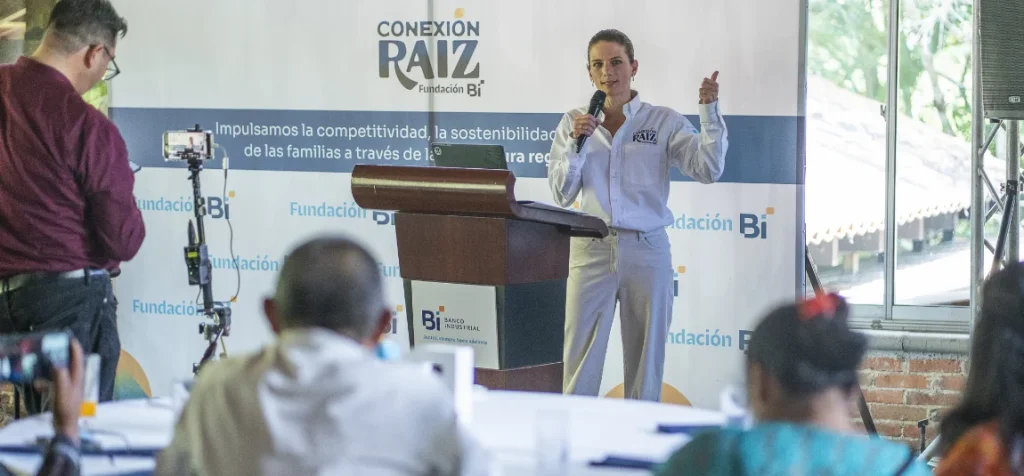
As María José Paiz, General Manager of Fundación Bi, pointed out, the results demonstrate what happens when an entrepreneur has the right methodology, support, and the discipline to put each lesson into practice.
That combination not only strengthens individual companies; it also helps build more dynamic communities, where economic growth creates jobs, drives innovation, and opens up new opportunities for Guatemala.
Frequently Asked Questions
What is ScaleUp Guatemala?
It is a business acceleration program launched by Fundación Bi and the Kirzner Entrepreneurship Center at Francisco Marroquín University to help small and medium-sized businesses grow in a profitable and sustainable way.
How long does the ScaleUp program last?
The program lasts five months, during which companies work on sales, marketing, finance, and human resources using a hands-on approach.
What types of companies can participate?
It is aimed at small and medium-sized businesses that are already in operation and are looking to accelerate their growth, improve their processes, or expand into new markets.
What results did the eighth cohort achieve?
The seven participating companies increased their sales by an average of 31.88%, created 33 new permanent jobs, and all of them innovated or improved their products and services.
Why is Fundación Bi promoting this program?
Because it believes that strengthening businesses also strengthens communities, since business growth creates jobs, drives innovation, and contributes to the country's economic development.